Popular Posts

Showing posts with label Gun safety. Show all posts

Thursday, March 24, 2016

Gun safety always comes first

I think we can all agree that guns are dangerous. There is a tiny explosion that happens inches away from your hand that has enough power to launch a tiny projectile at thousands of feet per second. If that isn't dangerous, I don't know what is.

Firearms are dangerous, but so is just about everything else in this world. There is always an associated risk when doing any sort of activity that we all accept. When you get in your car, you are driving a way in a death trap. When you play a sport, you are vulnerable to injury and in very rare cases, death.  You cannot let these deadly things control who you are, and what you want to do. In every one of these cases, however, there are many ways to decrease the likelihood of death or injury, and with guns, it is no different.

If you are new to guns, or thinking about getting a gun for the first time, it is imperative that you learn how to safely handle these tools prior to using them. The most helpful thing for you to do is to find a hunter's safety or a gun safety class at your local gun range and take that immediately. It doesn't matter if you are actually hunting or not, 100% of the information provided in those classes can be used every single day you are handling firearms. Don't get discouraged if the class is full of 13 year old kids or if you are the oldest one there. The hands-on experience you get is going to much much better than reading some stuff online.

While you are here though, I can provide you with some safety tips. The information I will be giving though should reflect exactly what you find elsewhere. The gun community as a whole are one of the safest groups of people I have ever been around.

Always point the firearm in a generally safe direction.  

Any time you handle a firearm, it is important that you treat it with the care and respect it deserves. Whenever a firearm is loaded, is has the ability, in the right hands, to almost instantly take a life. Just like if you are holding a rattle snake, you need to hold it so that you don't hurt yourself or others. 

Point the muzzle of the gun, or the end where the bullet comes out, in a generally safe direction. Strait up in the air, down at the ground, down range, or just generally away from any people. Don't point it at people, or animals or in the direction of traffic. Failing to do this is called "sweeping" someone with your muzzle. 

Sweeping other gun owners with your muzzle is a good way to get a gun pointed at you as well, and can ruin a good day at the range for anyone. If you see any one violating this rule, whoever they are, you need to IMMEDIATELY bring it up. There should be very swift and severe comments in that person's direction, if not physical intervention. Seriously, take the gun away from them if that is what is needed. 

All gun rules are created equall, but if you break every other rule, following this rule will at least keep everyone alive.

Never point a gun at anything you don't intend to kill or destroy.

This is an offshoot of the first rule. The purpose of a firearm is to fire a projectile. Not doing that with the gun is like not having a gun in the first place. Basically, you are going to need to point the gun at something and fire it, but you need to ask yourself if you are willing to lose whatever it is you are pointing at.
If you are hunting, pointing your gun at the deer, or hog, or duck you intend to kill is a necessity.
Pointing your gun at the target downrange is required if you are going to shoot it. pointing the gun at the intruder you are defending yourself from is an important part to your survival in that situation.

Don't point your gun at your dog. don't point your gun at your brand new 55" flat screen on your wall. Don't point your gun at people who mean you no harm. this is a good way to lose your precious items, or even worse, a good way to kill someone important to you. 

Keep your finger off the trigger until you are ready to fire.

Guns are designed to be held with your finger on the trigger so you can fire it comfortably. The ergonomics push your finger to it. It will feel awkward for you to keep your finger off the trigger, but do it anyway. 

You know you are ready to fire when you have the gun up, pointed at your target, and when you are
aiming down the sights. Just as above, know your target and be sure it is something that you are okay with shooting.

At that point only, can you put your finger on the trigger, and pull.

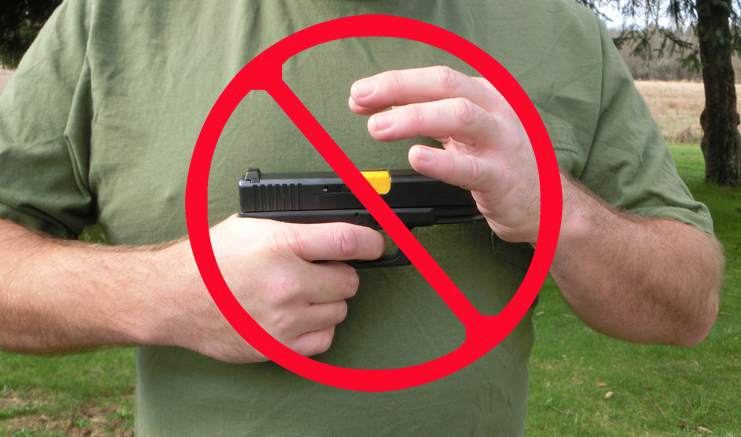
Train your mind to never touch the trigger until you are ready. Don't even think about it. Some people don't even like putting their finger over the trigger guard. Keep your finger above the trigger, lying against the frame of the gun.

Many many negligent discharges happen because someone is is being careless and they have their finger on the trigger. Put just a little too much pressure on it, and the gun will do what it is told and fire.

I have never heard of a single instance of a gun, even a poorly made gun, "just going off." Guns don't "just go off." Guns are inanimate objects and they do not have a mind of their own. They cannot fire themselves. In cases where an inexperienced gunman claims "the gun just went off," that gunman has always had their finger resting on the trigger. 

Always treat a gun as if it is loaded, even if it is not.

I don't care if you have checked that gun ten times to make sure it was unloaded. You could have a chamber flag in, and I still wouldn't care. At this point, it is not about whether it is safe or not, it is about creating a lifestyle and a habit of safety.
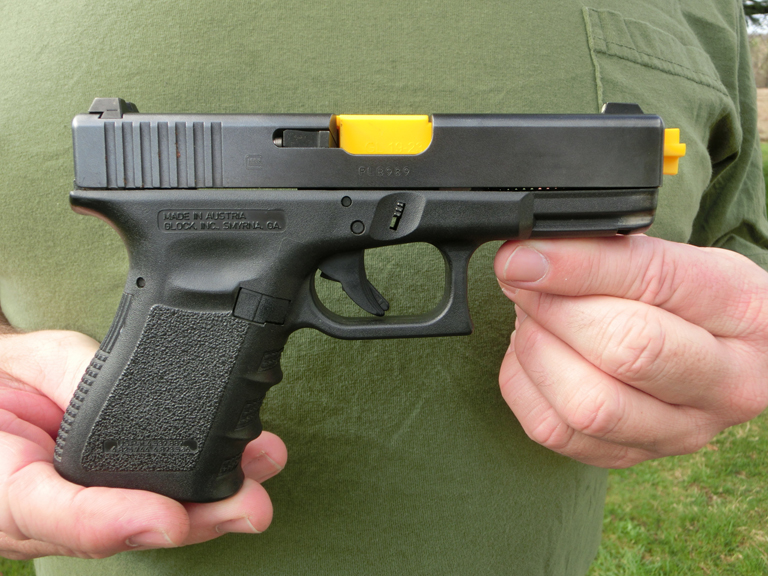
You might argue with me til you're blue in the face about how your gun is not loaded and how it is
safe, and the moment you forget that you left a round in the chamber, you are going to shoot your foot, or worse. 

Always pretend like there is a round in the  chamber. check it ten times, please, but even after you check it, get into the habit of continuing to treat it as if there is a round in the chamber. Guns are dangerous, and many people find them scary. You might be comfortable in knowing your gun is unloaded, but 

Know your target and what is behind it.

The bullets that guns fire vary wildly in size, weight and velocity when fired. each one reacts to a surface differently. Some rounds are designed to dispense all of its energy as quickly as possible, but some other rounds are just for fun, and do not have so much though put into them. 

A bullet can easily pass through a target and land some place far away. You could easily miss your target, which definitely send the bullet toward a location at a further distance than you intended. If you are shooting steel targets, and you happen to hit one, the bullet will shatter into a billion pieces and fly in just about every direction, sending lethal scraps of shrapnel hurtling in an unintended direction.Bullets will bounce off the ground, off trees, off steel, and especially off water. 

Know whatever it is you are shooting at, and try to understand how the bullet will react when hitting it. Look past the target to make sure there is nothing behind it you might accidentally hit. Look around the target to make sure any shrapnel will not damage anything precious or hurt anyone you do not intend to hurt.
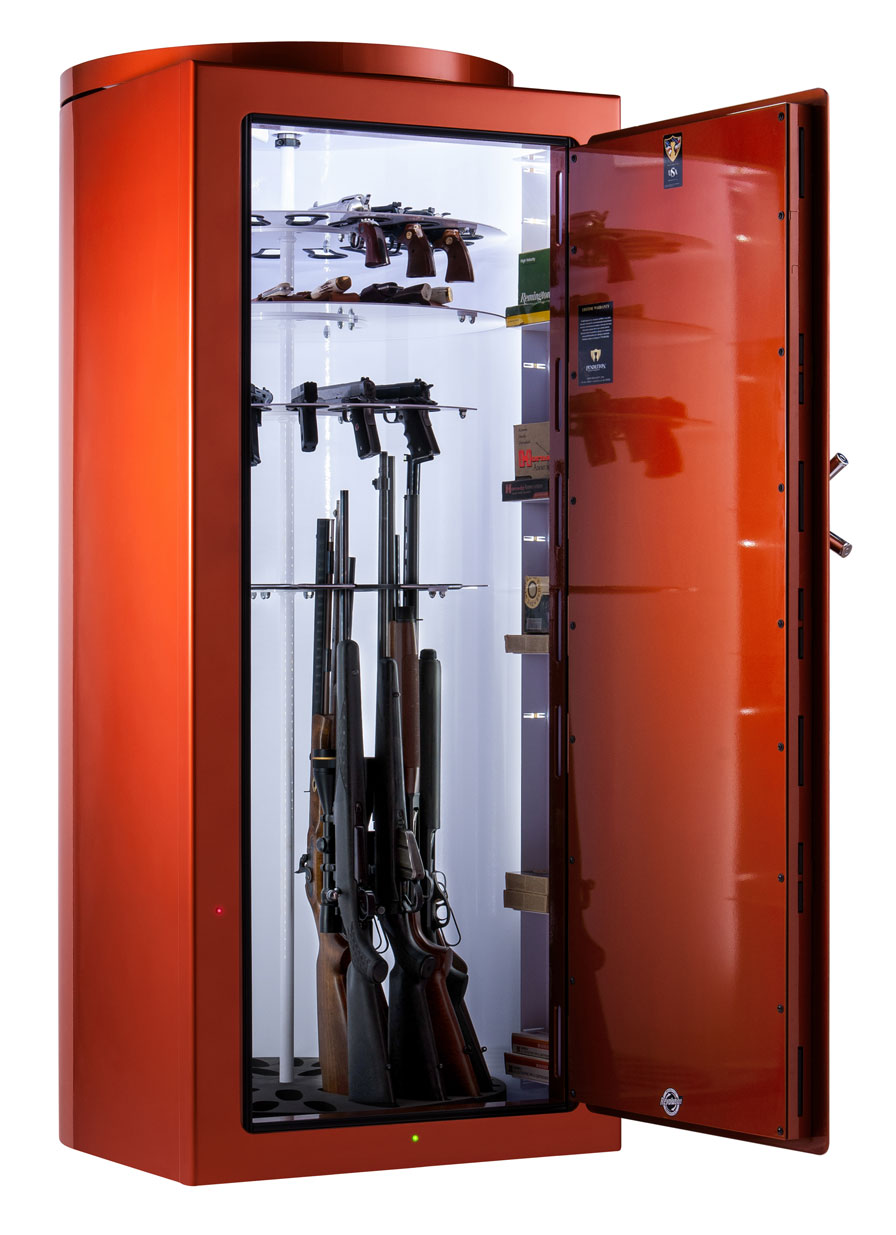
Store all firearms out of reach of unintended users.

Unintended users could be almost anyone, and the length that you go when storing your guns could change depending on your situation.

I am married, but I have no children. I do not need to worry (right now) about children picking up my
guns, because there are no children around. I have a simple gun cabinet to keep my guns in, and I even keep a gun on my headboard. The unintended users in my situation are any intruders who might want to steal the most valuable things in my house... which are my guns...

If you live with children, you have to be much more careful. Do not store guns and ammo in the same place. Do not keep a gun loaded. Keep a gun in a locked container that only you can have access to. They make safes that use a fingerprint scanner, and if you think that is going overboard for just a few kids, then you don't know how crafty kids can be. 

You can't just treat guns like you would the alcohol. "Just put it on the top shelf, they won't be able to get to it! they are like two feet tall!" well when your kids get into the booze, they just get a bit drunk. when kids get into the guns, they get a bit dead. The most heartbreaking stories on the news are ones where the ten year old kid finds dad's gun under his pillow and ends up shooting himself. Save yourself the heartbreak. Get something impenetrable. 

If you have a code to get into your safe, never tell them the code. If you have a key, always keep that key on you. If you feel the need to have a gun near your bed, get one of those pistol safes that are specifically built for it, and then never let them see you use it. I will voice my opinion about kids and guns at a later date, but no matter what your opinion, it is common sense to keep guns out of the hands of anyone who is not responsible enough to use them.

Last word.

I hope that I have done this subject some justice. There is nothing more important when getting into firearms than safety. It is everyone's responsibility to make sure that they follow these rules and no one is exempt from them. If you are at the range and you see Jerry Miculek, and he is breaking any one of these rules, you are obligated to yell at this world record holder. Don't worry, he is very safe with his firearms, so you won't have to, but the point remains. I don't care who it is, or how long they have been using firearms. These rules stand for everyone.

Sunday, March 20, 2016

Home Defense Weapons

Hello possible readers!

as you can tell by the title, we are going to be talking about Home Defense weapons.

I feel like I need a disclaimer on this post as well, because sometimes the subject of home defense with guns gets a bit touchy.

My home has never been broken into. I really really hope no one decides to break into my home. Although I am prepared for the possibility, I have no idea how I would react in such a high pressure situation. Even if someone were to break into my home, I don't know if I will even need to shoot them, or if I even have the mental constitution to do so. I do not fantasize about someone breaking into my house, I just want to be prepared just in case. Just like I have never had my car start on fire, but I have a fire extinguisher just in case it ever does.

SO! with that out of the way, we will move on!

We are talking about the best firearms one might use to protect themselves from a home invasion.

If you think about the situation of a normal home invasion or break in, you are probably going to be caught by surprise. There are some cases where the invader knocks first, but if that happens, it is because they are looking for a house with no one home. It makes for an easy target. so if someone is stupid enough to just break in, you are going to be very surprised.

In this situation, literally grabbing anything to defend yourself will be helpful. If all you have is a Mosin Nagant, grab it. something is better than nothing. Just because I don't mention it here, doesn't mean it wont work, or its a bad idea. There may be better options, but it doesn't make your gun "the wrong" gun.

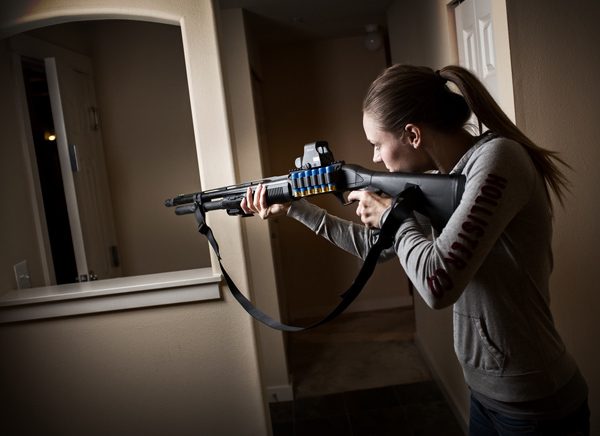
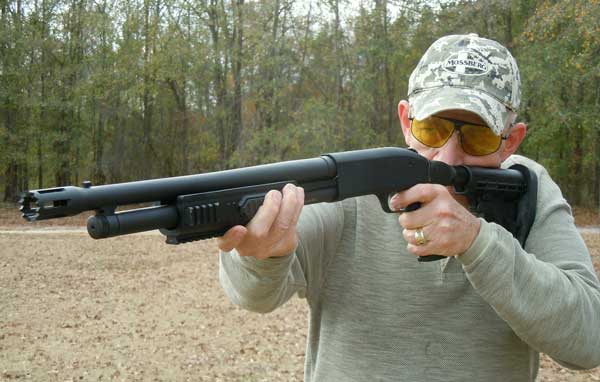
I have thought a bit about this and have discussed this with some people. The first gun that always comes to mind when you talk about home defense is a pump action shotgun.

Gun #1
Pump Action Shotgun

This is the most common, because this freakin works.

It is said that the scariest noise intruders can here is the pumping action of a shotgun. Sometimes you wont even need to say anything. just rack the gun, load a round in the chamber (as a plan "B") and most of the time the bad guy will just turn around and walk out. 

What if he doesn't though? What if the sound triggers the fight response, rather than the flight response? No problem! shotguns are easy to aim and shoot a spread of small BBs that can pack quite the punch. The effective range for a shotgun is out to about 50 yards, which is normally much further than any distance inside a house. 

The biggest issue that may come up with a shotgun is the recoil. If you are a person of slightly smaller stature, and are afraid of the recoil that comes with a big 12 gauge shotgun, do not feel embarrassed about getting a 20 gauge and some lighter ammo. As I said above, anything is better than nothing, and getting shot with anything is not going to be fun for any intruder. 

The pump action shotgun also holds multiple rounds, in case followup shots are needed. this is another advantage over the break action double barreled shotgun. 

Gun #2
Handguns

I have grouped this up, because there are many many many handguns on the market, and most of them will work perfectly fine. I will be more specific about pros and cons, and what I think makes a good handgun for home defense.

Many gun owners will say something along the lines of "you need a 1911 in .45 because the .45 caliber round has a ton of knockdown power" and while that is not wrong, it is a bit narrow minded.

I love the 1911. The design, the history, the performance the caliber, the feel. Everything about it makes it a great gun, but it may not be the best gun for the job. The .45 caliber round has a lot of recoil, and unless you are a strong, confidant, experienced shooter, this will likely be too much for you to handle. 

Keep in mind as well that you will be in a high stress situation. Your heart is going to be pounding out of your chest. Your adrenaline is going to be pumping more than if you jumped off a cliff! I can guarantee you will be shaking. You don't need to have a gun you can't control to defend yourself. 

Whatever gun you end up choosing, make sure you are familiar with it, and that you are comfortable with it. Practice at the range as much as possible. Take it apart. clean it regularly. load it and unload it. Practice your draw. go through possible worst case scenarios in your mind and work on making that gun part of your instincts. 

I recommend a smaller caliber striker fire pistol. Probably a 9mm or a .380 or something. Depending on the one you select, it can hold up to about 18 rounds in the magazine before needing to be reloaded, and reloading is fast and easy. They normally come with a second magazine standard. 

Striker fire pistols often lack an external safety, which is a plus in my mind. The real safety when handling a gun should be the one between your ears. All striker fire pistols also come with a bunch of internal safeties in case you end up dropping it. They will never go off on their own. You must specifically pull the trigger to fire it. The reason I do not like an external safety on a home defense gun is because that is just one extra thing to try and remember in a high stress situation. If your intruder decides that they don't think you are serious about shooting them, and you forget to take the safety off your gun, you could end up in big trouble. 

There are many options for this, but the three biggest brands are glocks, Smith and Wesson M&Ps and Springfield XD series pistols. I personally own a turkish striker fire pistol that I trust with my
life (see photo to the right), so don't think that I am just touting the brand name products. There are many many good gun companies out there who make a great product who don't fall under one of those names. 

Gun #3
AR-15

There are some issues with pistols that can be addressed with the AR-15, and there are some limitations with the AR-15 that might make you want to use a pistol instead, but neither is a bad choice for home defense.

The AR has detachable 30 round magazines, which is a lot of ammo without having to reload, and a quick reload if you ever do. Most shoot a .223/5.56 caliber round, which is a small, but quick cartridge. The AR is shoulder fired, so that increases accuracy, and reduces muzzle movement from all of the adrenaline shaking that is happening. The gun has low recoil and yet the round hits pretty hard. 

The biggest issue with the AR, in my opinion is size of it. Without going through the ATF paperwork, as a civilian, you are required to have at least a 16" barrel when you add on any flash hider, and the rest of the gun behind that barrel, it can be pretty cumbersome to get around a doorway.

It can be a bit complicated to get going too. Lets pretend you are like me, and you do not feel comfortable with a round in the chamber while the gun is just sitting near your bed. You hear a bump in the night, and you grab the gun and the full mag which is kept near it. Insert the mag in the gun, then either pull back the charging handle or press the bolt release button (depending on the state that your gun sits at rest), click the safety over, and now you are ready to go. 

If you practice your routine, this won't be any issue to you. The gun will perform perfectly for self defense in this situation. I like to reduce the number of things to remember and reduce my movement as much as possible, but anyone can get good at any motion if you practice enough.

Item #4
Suppressor

No, there were not three other items before this one. This isn't a gun, but is an excellent addition to any home defense gun. It needed to be mentioned in this list.

Many people think that suppressors are illegal, and that is not true. Much like the SBRs I mentioned in my last post, suppressors are a class 3 item and you must go through ATF paperwork and 6-8 weeks before you are allowed to get one, but after that they are perfectly legal. Laws on this change throughout the country and almost every year it seems, so be sure to brush up on your local suppressor laws before attempting to get one.

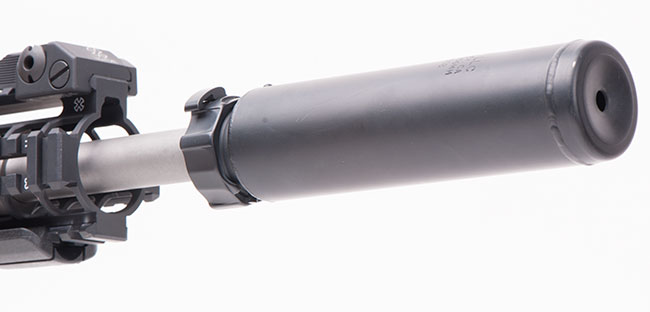
Suppressors, or silencers, are not quite like the movies would make them out to be. They are not just used by assassins to kill someone in the middle of a crowd without anyone knowing. They do not work quite that well, but they do reduce the noise of a firearm to the point that you do not need to wear ear protection when you fire it.

Most suppressors reduce the noise between 20 and 50 decibels and you can still hear an audible "BANG" but you won't damage your ears. If you have ever fired a gun indoors (my range has a shooting shack for shooting in the winter) you understand that the walls seem to amplify the noise. the moment you pull the trigger indoors without ear protection on, your vision will get blurry, you will hear a ringing in your ears, and possibly some sharp pain. 

How does this relate to home defense? When you wake up in the middle of the night, and you need to fire a gun at an intruder, do you really think you are going to ask him to wait while you find ear protection? Nope. You won't have time to cover your ears, and when that gun goes off, you are going to feel like you have just been punched in the ear. You better hope you hit the guy and he has decided to leave you alone, because if you missed, and they are still coming after you, you are now vulnerable. 

I know I made it sound like this is a must-have item for everyone, however, very few people have suppressors, and I will tell you why.

To get a suppressor, you must submit paperwork and a $200 tax stamp to the ATF along with a ton of personal information. You wait 6-8 weeks for approval and after that, you pay the suppressor manufacturer $800 or more for the item itself. 

Why would you pay $1000 or more for this item? Your house will probably never get broken into. If it does, you probably won't have to fire your gun, and if you do, you could save $1000 by just making sure you don't miss. You might only fire one or two shots anyhow, so the risk of permanent hearing damage is pretty low. 

You need to make the best decision for you and your situation. Getting a suppressor is not going to be the best choice for everyone, but if time and money are not an issue, or if you live in an area where your risk is higher, this may be some thing to look into.

Gun #5
My perfect choice
Kriss Vector, SBR, Suppressor

If money, and time were no issue, and you wanted to make sure you had the best possible choice for your home security at any cost, in my opinion it is the Kriss Vector.

The Kriss Vector was designed to be a Sub-Machine Gun (SMG) which is a shoulder fired rifle that shoots a pistol caliber round on Fully-Automatic. Kriss Vector also makes civilian legal, Semi-Automatic versions of their SMG that just about anyone can buy for around $1500.

What makes this gun so cool? It has a revolutionary recoil mitigation system. It reduces felt recoil by 60% and reduces muzzle flip by 90% according to their website. This is especially important when you are launching a big, fat, slow, hard hitting round like the .45 caliber round. 

What? didn't you just say earlier that the .45 caliber might not be the best round for home defense? well... sort of...

The round itself is not bad, by any means. It is exactly what you want, as long as you can hit something with it. It is a large round that moves slow and packs a big hit. This will put down just
about anything you hit with it, especially a man. It is also great because it will disperse a lot of it's energy very quickly. This means that if you miss, the bullet will not travel through four walls and kill the neighbors dog, or worse.

Remember that recoil mitigation system I told you about? and the fact that it is shoulder fired? having the gun rest on your shoulder creates another point of contact, making the gun more stable in your hands. recoil going through your shoulder is going to be taken a bit easier than recoil you feel straight through your hands. On top of
that, the Kriss throws all of the energy for the shot straight down using a weighted bolt.

Less recoil in your shoulder means more accuracy right off the bat. reduced muzzle flip means faster followup shots if you need them. 

So why an SBR? The big problem with shoulder fired weapons is their length. A normal civilian version Vector also comes with a 16" barrel and that can really get in the way when you are moving through doors, especially with a suppressor on the end of the barrel. The gun normally comes with a 4" or 5" barrel, which is all you need to get the round going in the right direction and hit your target. The suppressor on the end would add a bit more length, but it will be much more manageable. 

The Vector also uses standard Glock magazines, of which you can find 30 round capacity mags. It comes standard with iron sights, a top accessory rail if you want to add a red dot, and a bottom accessory rail if you want to add a laser, or a forward vertical grip. 

This platform, in my opinion, has the most upside and the fewest downsides. The biggest downside is the ATF paperwork, and 2 $200 tax stamps you have to do, and the 6-8 weeks you have to wait for your SBR and your suppressor. The gun costs $1500, which is about normal for this type of gun, and the suppressor can cost just as much depending on the one you get. This means you are dumping almost $3000 on something that may never get put to practical use... That is a really really expensive fire extinguisher...

Closing thoughts

As I have said, multiple times, it doesn't matter what gun you choose to protect yourself with. If all you can afford is a Hightpoint, then use it. Something is better than nothing. The information I provided above is meant to be entertaining, helpful and hopefully it evokes a discussion. 

Let me know what you think.